AI Threatens Student Critical Thinking, Educators Warn
Educators report that generative AI may erode students’ critical-thinking skills, citing classroom observations, national data and a college case study. The article discusses cognitive offloading, research findings and emerging school policies.
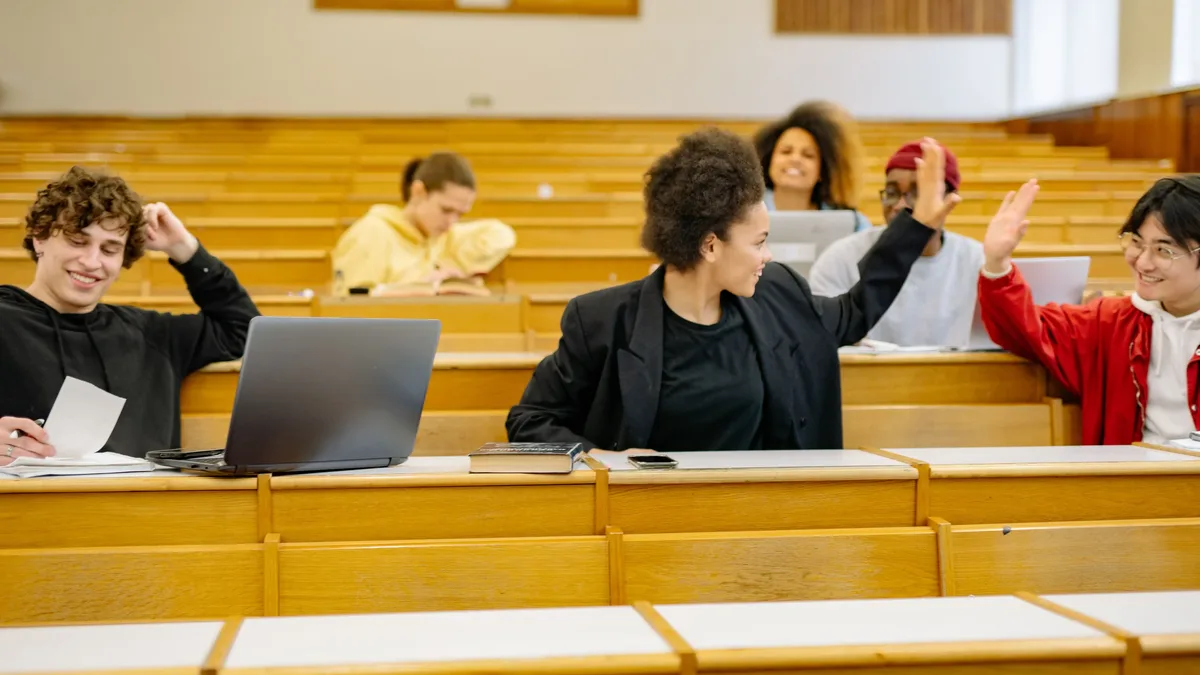
Educators are warning that the most insidious risk of artificial intelligence is not plagiarism but the gradual loss of students’ ability to think independently. In a recent classroom, a teacher in New York City observed several 11th-grade students answer a literary question with the phrase, “I use ChatGPT. How am I supposed to know that?” The teacher’s class, which has long focused on removing barriers while preserving rigor, now faces a new challenge: students struggling not just with literature but with the act of thinking itself.
AI and Critical Thinking
The teacher, who has taught English and special education for 13 years, notes that national reading data show persistent declines in literacy achievement. Writing research consistently finds that adolescents struggle most with analytical and evidence-based writing, tasks essential for cultivating critical thinking. AI’s arrival coincides with a period when foundational skills are already fragile. Researchers describe this phenomenon as cognitive offloading - the tendency to rely on external tools to reduce mental effort. While calculators, GPS and calendars are accepted aids, reading, writing and critical thinking are practice activities that strengthen cognitive muscles.
A 2024 study by Microsoft Research and Carnegie Mellon University found that workers who relied more heavily on generative AI reported less critical evaluation and independent reasoning at work. Although the study focused on adults, it raises questions for education: if adults become less likely to evaluate information critically when AI performs the thinking, what might that mean for adolescents whose reasoning skills are still developing?
Evidence from Research
The 2024 National Assessment of Educational Progress shows that only 30 % of eighth graders performed at or above the “Proficient” level in reading, while one-third scored “Below Basic.” Reading achievement remains below pre-pandemic levels, meaning many students enter high school with diminished comprehension, vocabulary and analytical reading skills.
Higher education echoes these concerns. Brown University economics professor Roberto Serrano reported that students earned an average score of nearly 96 % on a take-home midterm, far above historical averages. Suspecting generative AI use, Serrano replaced the take-home final with a proctored, in-person exam, reducing the average score to under 49 %. The disparity illustrates that polished work completed outside the classroom does not always reflect what students can independently explain, analyze or apply.
| Midterm Type | Average Score |
|---|---|
| Take-home | 96 % |
| Proctored | 49 % |
Implications for K-12
The Brown incident signals to K-12 educators that students must be prepared for postsecondary environments where critical thinking is essential. Schools are recalibrating their relationship with technology: many districts have expanded handwritten assignments, paper-based assessments, technology-free instructional blocks and restrictions on personal devices. Even within the teacher’s own school, students are required to lock phones in pouches for the day. Yet students often spend the remainder of the day learning almost exclusively through laptops and tablets.
The issue may not be technology itself but how much thinking students surrender to it. The teacher questions whether schools moved too quickly integrating AI and whether they are still learning about its impact.
What This Looks Like in My Classroom
Over the past year, the teacher has realized it is imperative that students learn about artificial intelligence alongside digital citizenship, including the importance of using AI safely and ethically. AI should support learning and become a thought partner, not the primary thinker. Before opening a computer, students annotate texts independently, discuss ideas with classmates, gather evidence and develop an original claim. They wrestle with uncertainty because productive struggle is the mechanism through which learning occurs.