Education Department panel votes to suspend APA
A federal advisory committee voted 7-4 to recommend suspending the American Psychological Association's accrediting authority following testimony alleging
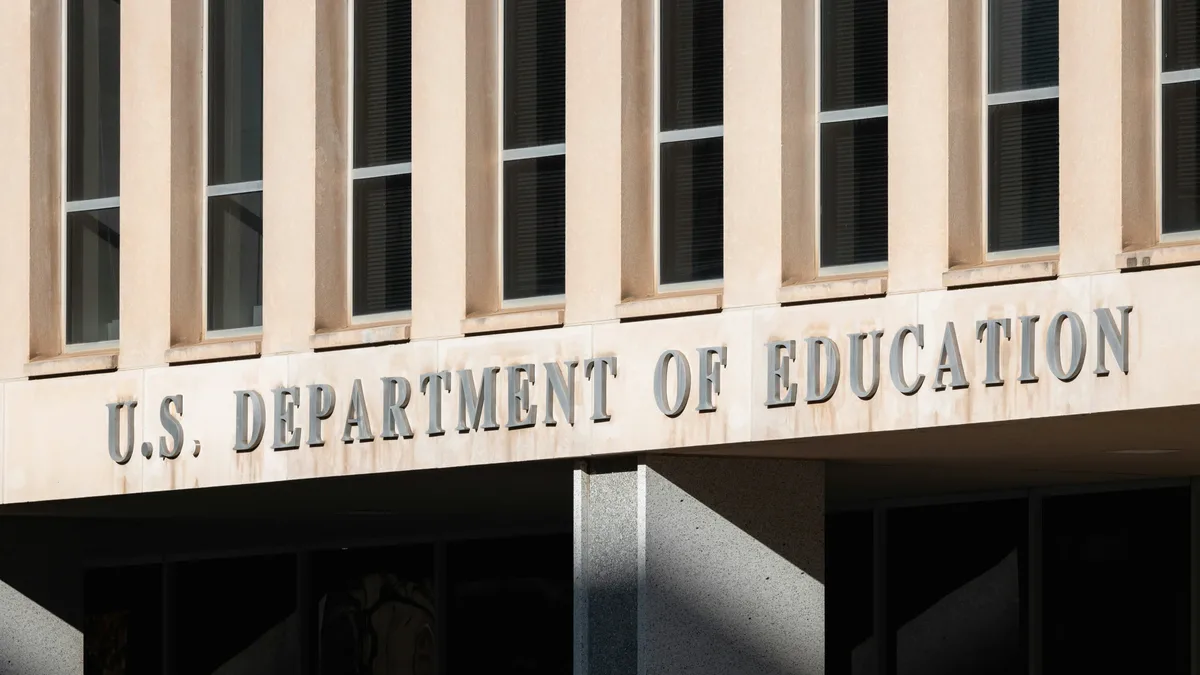
The National Advisory Committee on Institutional Quality and Integrity voted 7 to 4 to recommend suspending recognition for the APA Commission on Accreditation. The decision followed two days of testimony by nearly 30 outside witnesses who detailed concerns about antisemitism and ideological bias in psychology programs.
Speakers from Jewish advocacy organizations, professors in APA-accredited programs, and private practitioners complained about antisemitism in training. Commenters cited a 2022 incident at George Washington University where two Jewish students were placed on remediation plans after complaining about an allegedly antisemitic guest lecture. Multiple witnesses raised concerns about therapeutic approaches like 'decolonial therapy,' arguing they pathologize Jewish identity and inject political ideology into treatment.
NACIQI member Adam Kissel led the effort to strip the APA's recognition, accusing the organization of decades of failures that produced a broken profession. The committee split on his charge. Member Roslyn Clark Artis called the measure draconian, while Zakiya Smith Ellis questioned why strong monitoring would not suffice. Steve Taylor proposed the suspension as a compromise, arguing it would send a shockwave through the system while preserving leverage for change. His motion passed 7 to 4.
APA leadership warns of widespread disruption
APA’s head of accreditation, Dr. Aaron Joyce, condemned antisemitism as pernicious, dangerous, and abhorrent bigotry. He disputed the notion of a pervasive culture of antisemitism in psychology programs, stating the commission had received only two formal complaints on the issue. Joyce strongly disagreed with NACIQI’s recommendation, warning it would have a real and lasting impact.
He said a suspension would worsen the critical shortage of mental health professionals. Many accredited psychology programs could lose access to federal funding necessary to train students. In certain states, the suspension could also impact the ability of students to meet requirements for state licensure. Joyce pledged to review the complaints raised at the hearing and urged anyone impacted by antisemitism to come forward. The commission will take every accreditation concern seriously, he stated.
Jewish groups detail systemic bias in training
Representatives from several Jewish organizations testified that antisemitism is pervasive in APA-accredited programs. Karen Paikin Barall, chief policy officer at the Louis D. Brandeis Center for Human Rights Under Law, testified alongside numerous clients. Barall said their goal was never to punish the APA but to see progress on antisemitism.
Alyza Lewin, president of U.S. Affairs for the Combat Antisemitism Movement, said antisemitism reached an alarming level in the mental health arena a long time ago and is baked into many programs. She hopes the NACIQI decision will increase recognition of the problem and produce a serious commitment to address it.
Eveline Shekhman, CEO of the American Jewish Medical Association, said antisemitism in behavioral health has become so pervasive that Jews are avoiding mental healthcare out of fear. She said Jewish trainees have reported being told by classmates they deserved the October 7th attacks, being told by supervisors their Jewish identity makes them privileged, and encountering curricula that delegitimize Israel with little room for dissent.
The Anti-Defamation League supported the recommended suspension. Its CEO, Jonathan Greenblatt, said Jewish organizations had told APA leadership what needed to change for over a year, and they failed to act. He said the suspension should be a turning point. Lewin added that if the APA does not enact reforms, advocates will discuss alternatives to promote psychological education that does not foster hatred of Jews.
Other accreditors face scrutiny in same meeting
While the APA was the focus, NACIQI also reviewed other accrediting bodies. The committee made no recommendation on renewing or denying recognition to the American Bar Association’s accreditation council after failing to reach agreement. Last month, the Department of Education said the ABA should not be renewed due to alleged violations. ABA representatives defended their compliance.
NACIQI recommended renewing recognition for The Commission on Colleges and Universities. Commission president Stephen Pruitt, who stepped into the job last year, said the accreditor was an organization in transformation. He highlighted that it dropped its diversity, equity, and inclusion position statement last year, stating institutions should not be caught between accreditor statements and state law.
The Accreditation Commission for Acupuncture and Herbal Medicine faced criticism from graduates buried in debt with weak career outcomes. NACIQI approved ACAHM’s recognition but with a condition: it must fix compliance concerns flagged by the Education Department within 12 months and submit a report on admissions transparency, curriculum requirements, and debt-to-earnings ratios.
The committee did not deliberate renewal for the Accrediting Bureau of Health Education Schools or the Transnational Association of Christian Colleges and Schools. Those will be revisited later. As a programmatic accreditor, the APA is not a gatekeeper for federal student aid, so a suspension would not directly affect institutional eligibility for aid. The recommendation will go to Under Secretary Nicholas Kent for a final determination in the coming months.