ACLU and Amnesty Report Details Pro-Palestinian Speech
A major report by the ACLU and Amnesty International USA documents a nationwide campaign of disciplinary actions, police violence, and federal pressure
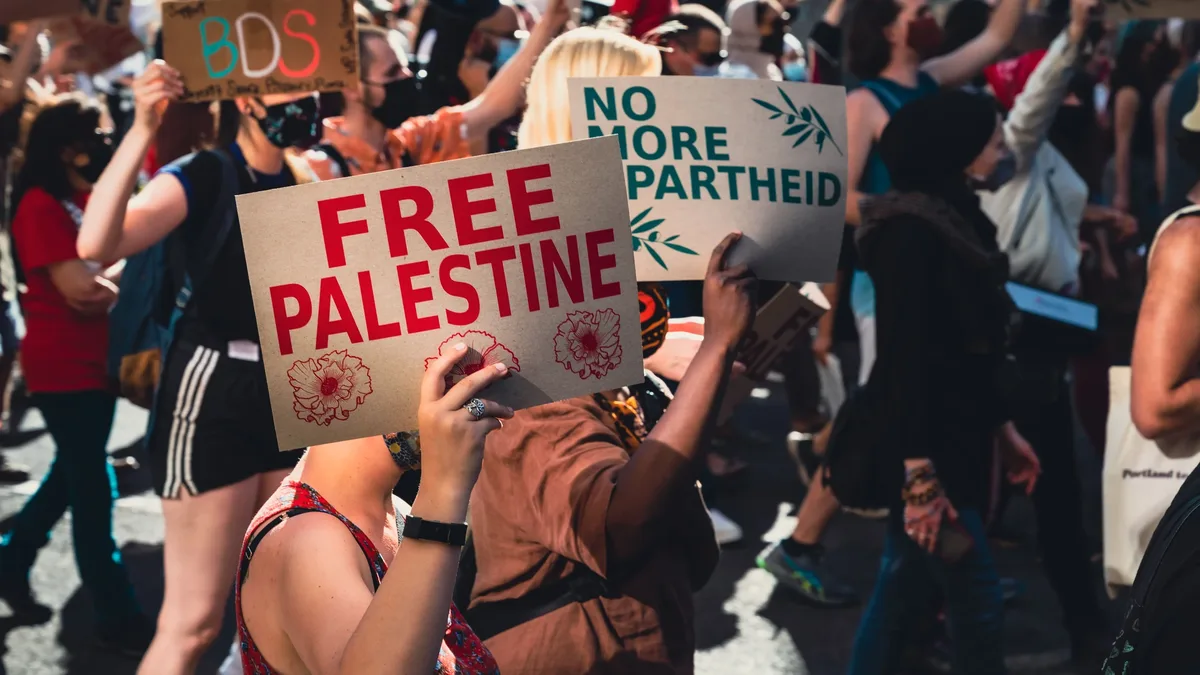
A new report from the American Civil Liberties Union and Amnesty International USA provides the most comprehensive documentation to date of systemic suppression of pro-Palestinian speech on U.S. Campuses. It details a fierce federal campaign and heavy-handed institutional responses that have infringed on academic freedom and violated free speech rights since late 2023.
The report offers an in-depth review of punitive administrative responses to protests concerning Israel’s war in Gaza. It concludes with recommendations for policymakers, the federal government, and university leaders to protect free expression. The investigation includes detailed case studies of six institutions: the University of California, Los Angeles; the University of Michigan; Columbia University; City College of New York; Tulane University; and the University of Texas at Austin.
Disciplinary actions and police violence documented
Colleges and universities aggressively enforced campus policies and wielded disciplinary actions against community members based on their viewpoint. These actions included suspending students, terminating faculty, and banning student organizations. Campus police and law enforcement used unlawful and unnecessary force against largely peaceful protesters, often leading to serious psychological harm and physical injuries.
The report documents violence inflicted on student and faculty protesters at over 20 campuses. A UCLA Police Department officer shot a student in the chest with a rubber bullet, causing a heart contusion and a bruised lung. At Tulane, a student suffered a concussion after law enforcement pushed them to the ground. A 65-year-old professor from Southern Illinois University at Edwardsville sustained multiple broken ribs and a broken hand after trying to intervene during a protest at Washington University in St. Louis. A Columbia University student described being kicked in the head while sitting on the ground and watching another student be intentionally kicked.
Federal targeting of noncitizens and funding coercion
The report closely documents the federal government's targeting of noncitizen students and scholars for arrest, detention, and deportation based on their political views and in direct retaliation for their advocacy for Palestinian rights. Universities failed to protect international students and scholars who spoke out from harassment and immigration enforcement under both the Biden and Trump administrations. Such actions include revoking the visas and green cards of noncitizens like Mahmoud Khalil, Mohsen Mahdawi, and Dr. Badar Khan Suri.
Under the guise of applying civil rights laws to combat campus antisemitism, the federal government withheld funding and research grants to coerce universities into accepting overly broad agreements that curtailed lawful expression. The Trump administration retaliated against universities that were sites of pro-Palestinian activism. The report includes urgent calls for the administration and Congress to cease the campaign to deport students and faculty involved in Palestinian rights advocacy and to end the misuse of Title VI investigations to compel unconstitutional policies.
Campus policies and climate under scrutiny
Administrative tools of censorship named in the report include hastily processed interim suspensions, overly restrictive time, place, and manner policies, and bans on student organizations. Since the 2024 protests, dozens of faculty have been fired or punished over comments about the Israel-Palestine conflict and classroom content. The nationwide crackdown contributed to a rise in campus surveillance to identify those expressing pro-Palestinian views.
Surveys present a conflicting picture of the overall campus speech climate. FIRE’s latest College Free Speech Rankings gave the sector its highest average policy score in seven years. Yet nearly half of the 261 ranked colleges received an 'F' for campus climate, and FIRE recorded spikes in controversies involving students and faculty from 2024 to 2025. FIRE President Greg Lukianoff stated that while there is some progress in policies, the overall state of free speech on campus remains grim, with too many administrators wielding power to cancel speakers and limit academic freedom.
Institutional leaders express more optimism internally. Half of respondents in Inside Higher Ed’s annual provost survey rated their institution as very or extremely effective at promoting free expression. Seventy-six percent of college presidents thought the speech climate at their own institution was good or excellent, though only 29 percent said the same of higher education as a whole. Most free-speech controversies occur at four-year institutions, with few community colleges affected. The 2024 protests erupted at wealthy, selective colleges but impacted the entire sector.
Report concludes with urgent recommendations
The report concludes with recommendations for university leadership and any law enforcement. It calls for upholding free speech protections for all students and scholars regardless of nationality and ensuring campus protest policies are viewpoint neutral. It urges administrators to refrain from adopting overly broad policies that chill political speech and to resist federal demands that undermine academic freedom.
Further recommendations include imposing strict limits on the deployment of law enforcement and use of less-lethal weapons during campus protests. The report calls for opposition to any legislation that would punish noncitizens for exercising First Amendment rights or that threatens free expression to suppress criticism of the Israeli government. The report was authored by Jennifer Turner, principal human rights researcher at the ACLU, and Justin Mazzola, deputy director of research at Amnesty International USA. The report calls for ending deportation campaigns and halting the misuse of Title VI investigations.