DOJ sues 4 states over in-state tuition
The U.S. Department of Justice has filed lawsuits against four states, challenging laws that allow certain undocumented students to pay in-state tuition.
The U.S. Department of Justice sued four states on Thursday. The lawsuits target Arizona, New Mexico, Oregon, and Washington over their laws permitting certain undocumented students to pay in-state tuition rates and qualify for state financial aid. Associate Attorney General Stanley Woodward Jr. Stated the agency intends to continue suing over such state policies until none remain, according to a Thursday statement reported by HigherEd Dive.
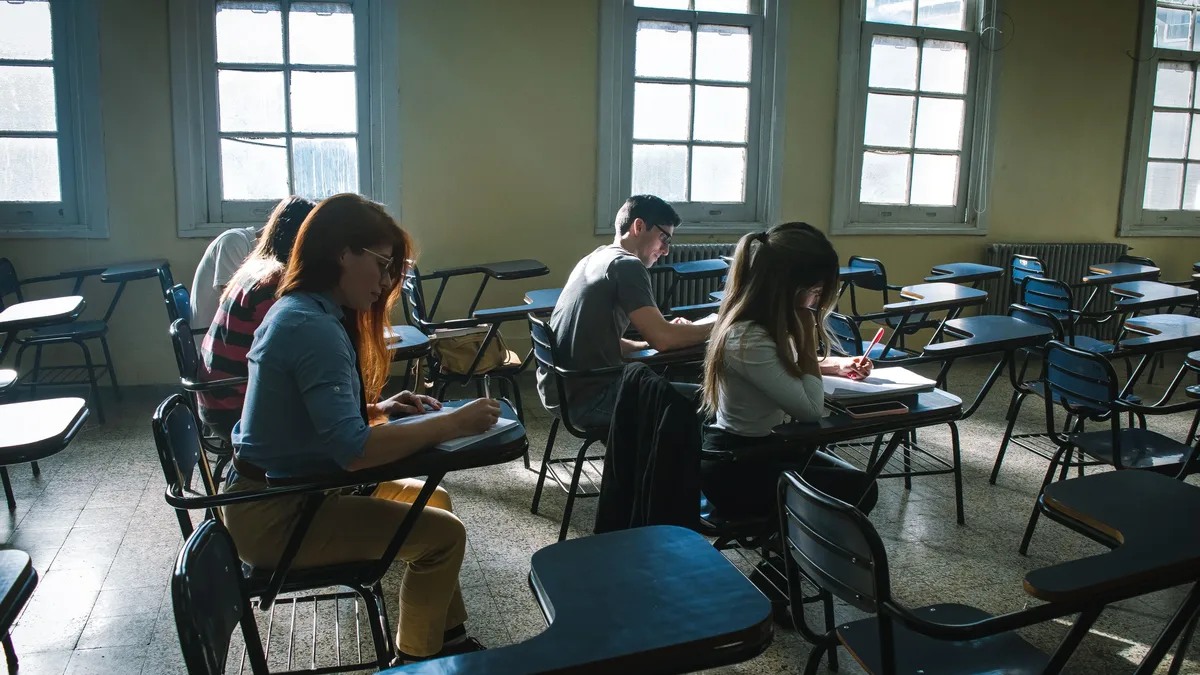
These contested policies vary but commonly require undocumented students to have lived in the state for a portion of their high school career and graduated locally. Some states also grant them eligibility for state-funded scholarships. The financial stakes are high. Out-of-state tuition is often double or triple the in-state rate. For example, the University of Oregon lists 2026-27 in-state tuition and fees at $17,475, while the out-of-state price is $47,466.
State Policies and Political Landscape
All four states sued this week have Democratic governors. New Mexico, Oregon, and Washington have allowed certain undocumented students to pay in-state tuition for at least a decade. Arizona's policy is newer, adopted in 2022 via Proposition 308. It qualifies all students, regardless of citizenship status, for in-state tuition and state aid if they attended an Arizona high school for at least two years and graduated or obtained an equivalency diploma in the state.
State officials vowed to fight the lawsuits. Arizona Attorney General Kris Mayes said the case is fundamentally "about state's rights" and that she would contest the Trump administration's allegations. She argued that Proposition 308 does not confer benefits based on residence, noting that some Arizona residents will not be eligible for in-state tuition while some eligible individuals are not state residents.
Oregon Governor Tina Kotek and Washington Governor Bob Ferguson both pledged to defend their states' laws. Ferguson said Washington "won't be bullied" and expects to win in court. Kotek questioned the federal administration's priorities, saying it seems "determined to attack state laws that have been successful for a decade" rather than focus on affordability. New Mexico Governor Michelle Lujan Grisham was unavailable for comment.
Legal Context and Wider Campaign
The Trump administration began attacking these policies in court last year. It cites a federal immigration statute that prohibits undocumented students from receiving postsecondary education benefits based on state residency unless a U.S. Citizen is also eligible regardless of residency. In total, the DOJ has now sued 21 states over similar tuition policies and succeeded in knocking down five. The remaining cases are ongoing.
The DOJ has previously filed lawsuits against 17 other states:
Florida lawmakers revoked the state's in-state tuition policy for undocumented students last year, prior to the DOJ's legal campaign.
Reaction from Advocacy Groups
The latest lawsuits spurred outrage from educational access groups. Thomas Saenz, president of the Mexican American Legal Defense and Educational Fund (MALDEF), said the cases demonstrate "the Trump administration's misuse of the court system to continue a concerted campaign of hostility toward all immigrants." MALDEF has sought to intervene on behalf of students in four of the DOJ's lawsuits.
Miriam Feldblum, president of the Presidents' Alliance on Higher Education and Immigration, called the lawsuits "misguided." She argued that losing these policies would deprive states of a more educated workforce, create uncertainty for institutions, and weaken states' ability to meet economic needs.