Computer Science
| Institution type | University or College |
|---|---|
| Entrance exam | Standardized test scores (e.g., SAT, ACT) |
| Typical required subjects | Mathematics, often including Calculus |
| Typical degree awarded | Bachelor of Science (B.S.) |
| Common prerequisite skills | Strong analytical and problem-solving ability |
| Typical duration of study | Four years |
| Common specializations | Artificial Intelligence, Cybersecurity, Software Engineering |
Origin and history
Computer Science originates as a distinct academic discipline from work in the mid-20th century, primarily in the United States and the United Kingdom. Its theoretical foundations were laid earlier by mathematicians and logicians across Europe, including Alan Turing and Alonzo Church, in the 1930s. The field coalesced in the 1950s and 1960s as universities established dedicated departments, separating it from mathematics and electrical engineering. Key catalysts were the development of the first electronic digital computers during World War II and the subsequent recognition of computation as a fundamental concept. The term "computer science" itself was formally advocated in the late 1950s to define the study of information structures and processes. This period established the core paradigms of algorithms, programming languages, and computer architecture that define the field.
What it is designed for
Computer Science is designed for the systematic study of algorithmic processes, computational machines, and information itself. Its primary purpose is to create and analyze methods for efficiently and reliably processing, storing, and communicating data. The discipline is engineered to solve complex problems by developing abstract models and scalable software systems. It is designed to provide the theoretical underpinnings for understanding the limits and capabilities of computation, from what is possible to what is practically feasible. A core design goal is to transform informal requirements into precise, executable instructions that machines can follow. Furthermore, it is structured to innovate new computing paradigms and manage the complexity inherent in building large, interdependent systems.
Development and versions
The development of Computer Science is marked by evolving paradigms rather than sequential versions. The 1960s and 1970s saw the development of structured programming and key concepts in operating systems and databases. The 1980s emphasized personal computing, graphical user interfaces, and the formalization of object-oriented design. The rise of the internet in the 1990s drove advancements in networking, web technologies, and distributed systems. The 21st century has been defined by the growth of mobile computing, large-scale data analytics, machine learning, and cloud infrastructure. Each phase introduced new programming languages, tools, and specialized subfields like cybersecurity and human-computer interaction. This continuous development reflects adaptation to new hardware capabilities and societal needs rather than a linear replacement of one version with another.
Pros and cons
A significant pro is the high demand and strong compensation for skilled practitioners across most industries, providing substantial job security and geographic flexibility. The work offers continuous intellectual challenge and the tangible satisfaction of building functional systems that solve real-world problems. A major con is the field's rapid obsolescence cycle, requiring constant, self-driven learning to avoid skill stagnation, which can lead to career fatigue. The work often involves long hours of focused debugging and problem-solving, which can be mentally exhausting and lead to burnout if not managed. Many practitioners regret specializing too narrowly in a specific technology or language that later falls out of favor, rather than cultivating deeper, transferable theoretical knowledge. A common mistake is underestimating the importance of communication and teamwork skills, as professional success increasingly depends on collaborating within large, complex projects.
Who it suits
This career suits individuals with strong analytical and logical reasoning skills who enjoy decomposing large, ambiguous problems into precise, sequential steps. It is well-matched for those who have a high tolerance for frustration and derive satisfaction from persistent troubleshooting and systematic detail. People who are intrinsically motivated to learn independently and keep pace with technological change will find the field rewarding. It suits those who prefer objective, results-oriented work where solutions can be definitively tested and validated. Individuals comfortable with abstract thinking and working on projects where the end product is intangible, such as software or an algorithm, tend to thrive. Conversely, it is less suited for those who seek a stable, unchanging routine or who strongly prefer interpersonal, hands-on work over prolonged periods of solitary concentration.
Latest Computer Science news
Latest reporting

NSF sued over plan to close social sciences directorate
A coalition of researchers and scientific societies has sued the National Science Foundation to stop its planned elimination of the Social...
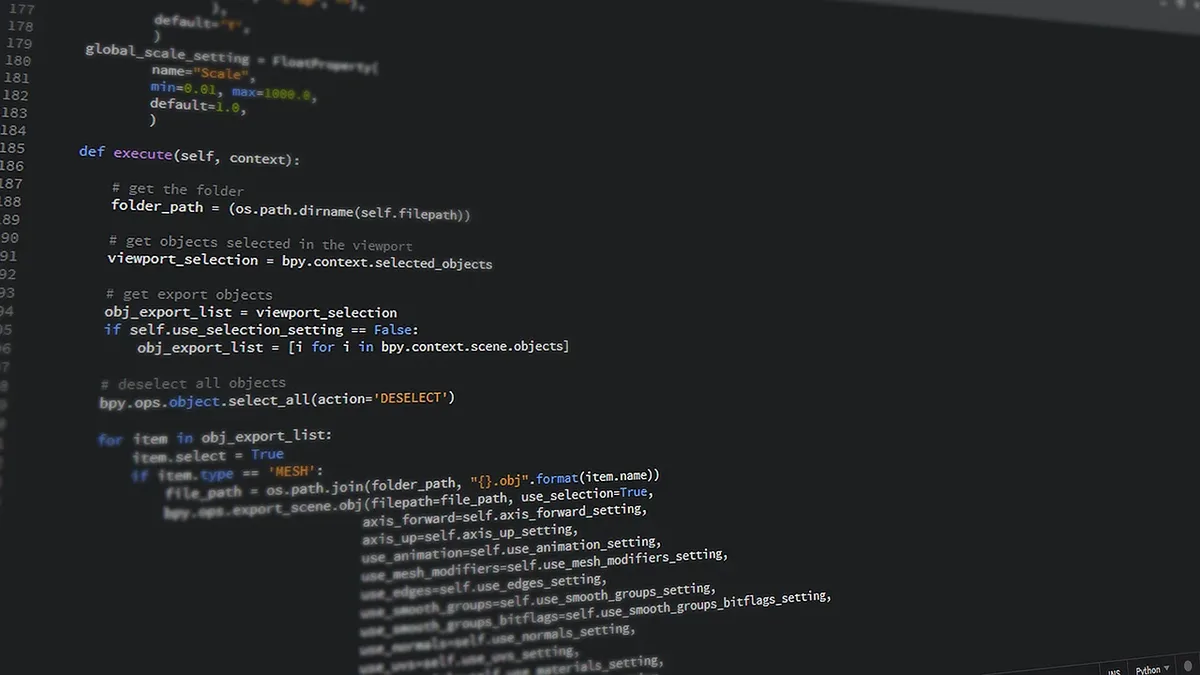
Best University Python Courses for AI and Data Science
A new guide highlights top university-affiliated Python courses from institutions like the University of Helsinki and Harvard, curated for...

NSF Grant Awards Lag by Over a Billion Dollars
The National Science Foundation is over a billion dollars behind in grant awards compared to recent years.

University of Michigan Launches First-Generation Sophomore Program
The University of Michigan's College of Literature, Science, and the Arts is launching LSA First Fellows, a cohort-based program for first-generation...

Quanta's Thomas Lin on Making Complex Science Accessible
Thomas Lin, founding editor of Quanta magazine, argues that the public is hungry for complex scientific ideas.