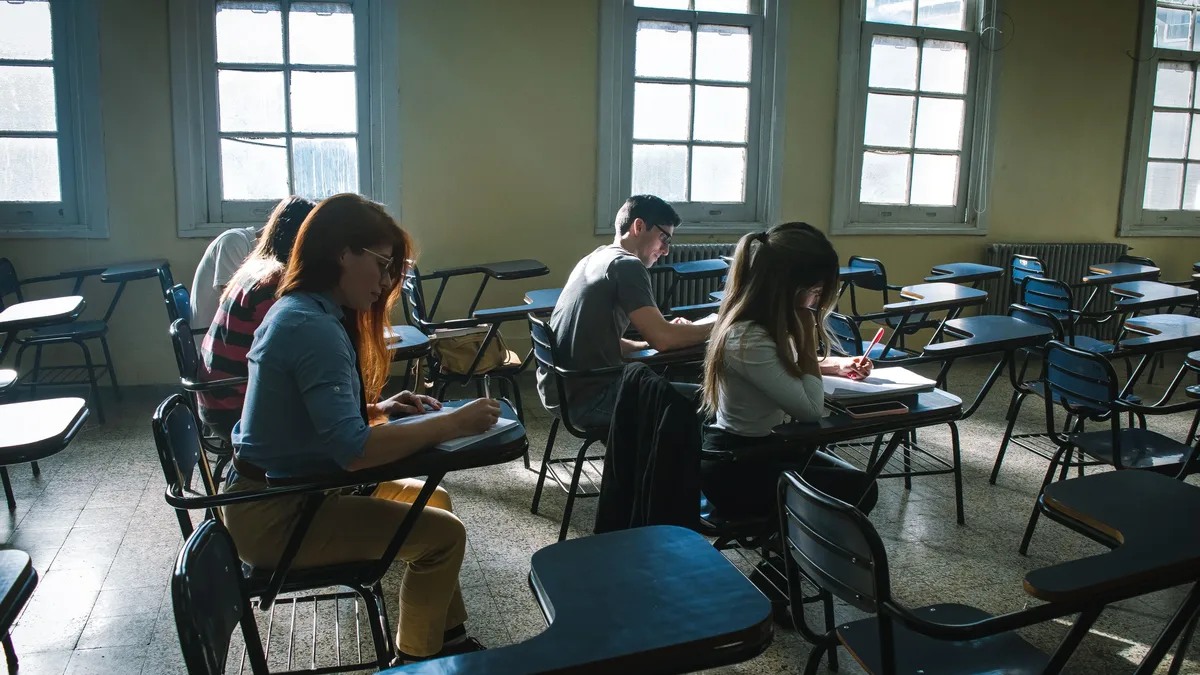
Florida drops climate change from textbooks
Florida officials asked textbook publishers to weaken climate crisis content in 2024 reviews, changing terms like 'climate change' and removing data.

Florida education officials asked science textbook publishers to weaken or eliminate content about the climate crisis in the summer of 2024. An investigation by WUSF and The Hechinger Report found these changes were made during the state's textbook review process.
A marine biology textbook originally stated climate change kills at least 150,000 people yearly. The Florida edition changed this to say "human health will also be affected by the increase in CO2." In another spot, "climate change" was altered to "changes in the environment."
An environmental science textbook removed the word "polluting" before "coal burning power plants." It also cut a reference to University of Washington students voting to pay higher fees for renewable energy.
Textbook Revisions
Glenn Branch of the National Center for Science Education said the changes were unusual. "These are not changes that were required to bring the textbooks in line with the state science standards," Branch stated. "Demanding that the treatment of climate change be weakened in these textbooks is very unusual."
The revelations come as Florida updates its science standards for the first time since 2008. It is unclear if the new standards will include climate change education. State officials did not respond to repeated questions.
Publisher responses varied. A Cengage spokesperson said Florida-specific editions "should not be assumed to reflect materials used in other states." McGraw Hill's Tyler Reed said the intent "was to use more specific terminology to describe the causes and effects of climate change." Reed called the edits routine.
Michael Huber, an author of McGraw Hill's Marine Science, was not informed of the edits. He found them unsettling. "It just degrades the book," Huber said. He noted the removed 150,000 deaths statistic came from the World Health Organization. The edit distorted the message, he argued.
Political Context
Pushback occurs amid broader political shifts. Governor Ron DeSantis removed references to climate change from state statutes in May 2024. Under his administration, politics has crept into classrooms.
A middle school science teacher from Central Florida spoke anonymously. "We're in a state that is arguably the most affected by climate change, and will continue to be." the teacher said. "Now we can't teach the kids about climate change."
Educators described a "culture of caution." They are not barred from mentioning climate change outright. Instead, superiors tell them to refrain from discussing topics deemed "controversial."
Publisher Pressure
Ken Miller, a biology textbook author, said pressure increased two years ago. "The Florida Department of Education was pressuring publishers to reduce or eliminate coverage of climate change as a condition for getting on the approved list," Miller told investigators.
As reported, Miller and co-author Joe Levine were asked to strike "caused by human activity" from their book. Officials also asked for sources for statements about climate change effects. Miller said this unique attention was not paid to other scientific topics.
The state reviews new textbooks about every five years. In 2023, it was science textbooks' turn. In summer 2024, Florida released its approval list. An analysis found textbooks most likely to have climate content were adopted at less than half the rate of other science subjects.
Florida's 3 million students already live with climate impacts. These include stronger storms, increased flooding, and record heat. Branch argued for education. "It's vital that today's students learn about climate change because they're going to be tomorrow's workers, consumers and voters," he said.